
Case study 01 / Marine tourism + local SEO
Building a Local Search Ecosystem for Englewood Boat Tours.
A newly registered tourism domain needed more than a polished home page. Tight Designs built a 67-route website that helps visitors compare experiences, understand Lemon Bay, plan around real conditions, and move toward a booking inquiry without invented promises.
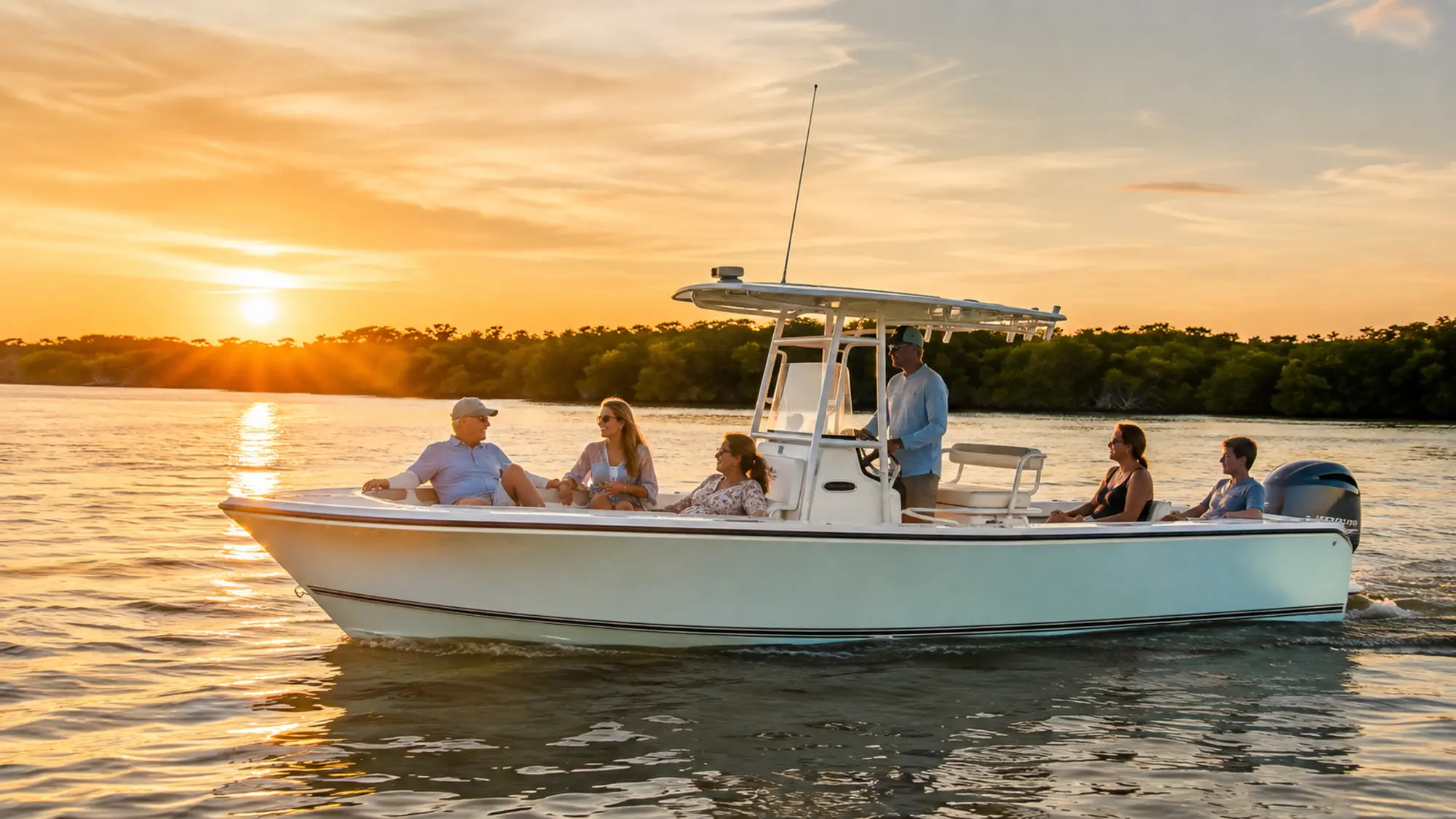
 Live local authority website
A tourism website designed to answer the search before asking for the booking.
EnglewoodBoatTours.com entered a competitive local market with no history, no inherited search authority, and several important business details that could not be responsibly published until confirmed. The assignment was to create a credible digital foundation for boat tours in Englewood while making the site immediately useful to visitors researching Lemon Bay.
The result is a server-rendered website organized around two commercial anchors... a signature Englewood sunset cruise and beginner-friendly inshore fishing on Lemon Bay. Around those offers, the site builds topical depth through destination guides, wildlife education, weather and tide planning, family questions, things to do, safety information, and policy pages.
The system is deliberately honest about its stage. It can document what was launched, what search engines can crawl, how inquiries are routed, and which measurements are installed. It does not claim ranking growth, booking growth, or revenue growth before those outcomes exist in verified first-party data.
Strategy
Positioning, search intent mapping, topic clusters, page hierarchy, and internal-link relationships.
Experience
Responsive design, visitor education, tour comparison, booking paths, forms, and local imagery.
Content
Original page copy, contextual FAQs, policy language, local destination information, and machine-readable alternatives.
Development
Custom PHP rendering, shared components, clean routing, JSON registries, structured data, validation, and analytics.
A blank domain does not have proof... but it still needs to earn trust.
The project had to become locally useful without pretending the new operation already possessed reviews, rankings, years of bookings, or details that had not been confirmed.
“Build enough depth to deserve visibility... without filling the gap with fiction.”
That tension shaped nearly every decision. The website needed commercial intent, but it could not publish a guessed dock, phone number, duration, price, route, captain credential, wildlife guarantee, or catch promise. It also needed enough substance to compete for local tourism searches without producing dozens of pages that merely swapped keywords.
New-domain reality
No organic history, link profile, brand search demand, or performance baseline existed at launch.
Fragmented customer intent
Some visitors want a sunset cruise. Others are researching family activities, fishing, wildlife, weather, or what Lemon Bay is like.
Unknown operating details
Public pricing, duration, exact departure location, phone number, and captain details were not confirmed for publication.
Natural uncertainty
Weather, wildlife, routes, sunset color, and fishing results cannot be guaranteed responsibly.
Turn uncertainty into clarity. The website tells visitors which details are general planning guidance, which details depend on conditions, and which details arrive with a confirmed reservation. That makes honest limits part of the trust system instead of hiding them in fine print.
One website... several connected reasons to search.
The architecture starts with the business offer, expands into decision support, and then earns broader local relevance through genuine Englewood and Lemon Bay topics.
Boat tours + booking intent
Sunset cruise, inshore fishing, private, wildlife, family, and sightseeing experiences.
Sunset cruise guide
Best time, weather, photography, special occasions, what to bring, Englewood Beach, and Manasota Key.
Lemon Bay fishing
Species, seasons, tides, beginners, families, gear, and inshore versus offshore context.
Local geography
Englewood, Lemon Bay, Englewood Beach, Manasota Key, Stump Pass, and Stump Pass Beach State Park.
Guides + policies
Weather, wildlife, children, safety, seasickness, first tours, cancellations, privacy, and terms.
Things to do
Useful paths for couples, families, evening plans, Englewood Beach, Manasota Key, and activities on the water.
| Visitor intent | Page system | Question answered | Conversion role |
|---|---|---|---|
| “boat tours Englewood FL” | Tour hub + experience pages | Which outing fits my group? | Compare, then request availability |
| “sunset cruise Englewood” | Commercial page + sunset guide | What is the experience and how do I plan it? | Build desire while removing timing friction |
| “Lemon Bay fishing” | Fishing tour + learning cluster | Is this right for beginners, families, and inshore expectations? | Qualify the inquiry before contact |
| “things to do in Englewood” | Local activity cluster | How can a boat tour fit into the day? | Introduce the offer earlier in discovery |
| “Stump Pass boat tour” | Area guides + related routes | Where is it and can a route be guaranteed? | Add local context without making a route promise |
Place names are used to explain relationships.
Englewood sits beside Lemon Bay, while Manasota Key separates much of the bay from the Gulf of Mexico. Englewood Beach, Stump Pass, and Stump Pass Beach State Park each matter to visitor planning, but they are not interchangeable. The content explains how these places relate to boating, sunset views, shallow estuary habitat, bridge travel, and land-side itineraries.
This matters for people first. It also gives search engines a coherent set of entities and relationships around Englewood boat tours, Lemon Bay sunset cruises, Manasota Key activities, and local inshore fishing.
Premium Florida coastal... without generic stock photography.
The signature experience is sunset on Lemon Bay. The design supports that promise with deep navy, teal water tones, warm sunset color, editorial type, and original imagery stored on the same server.
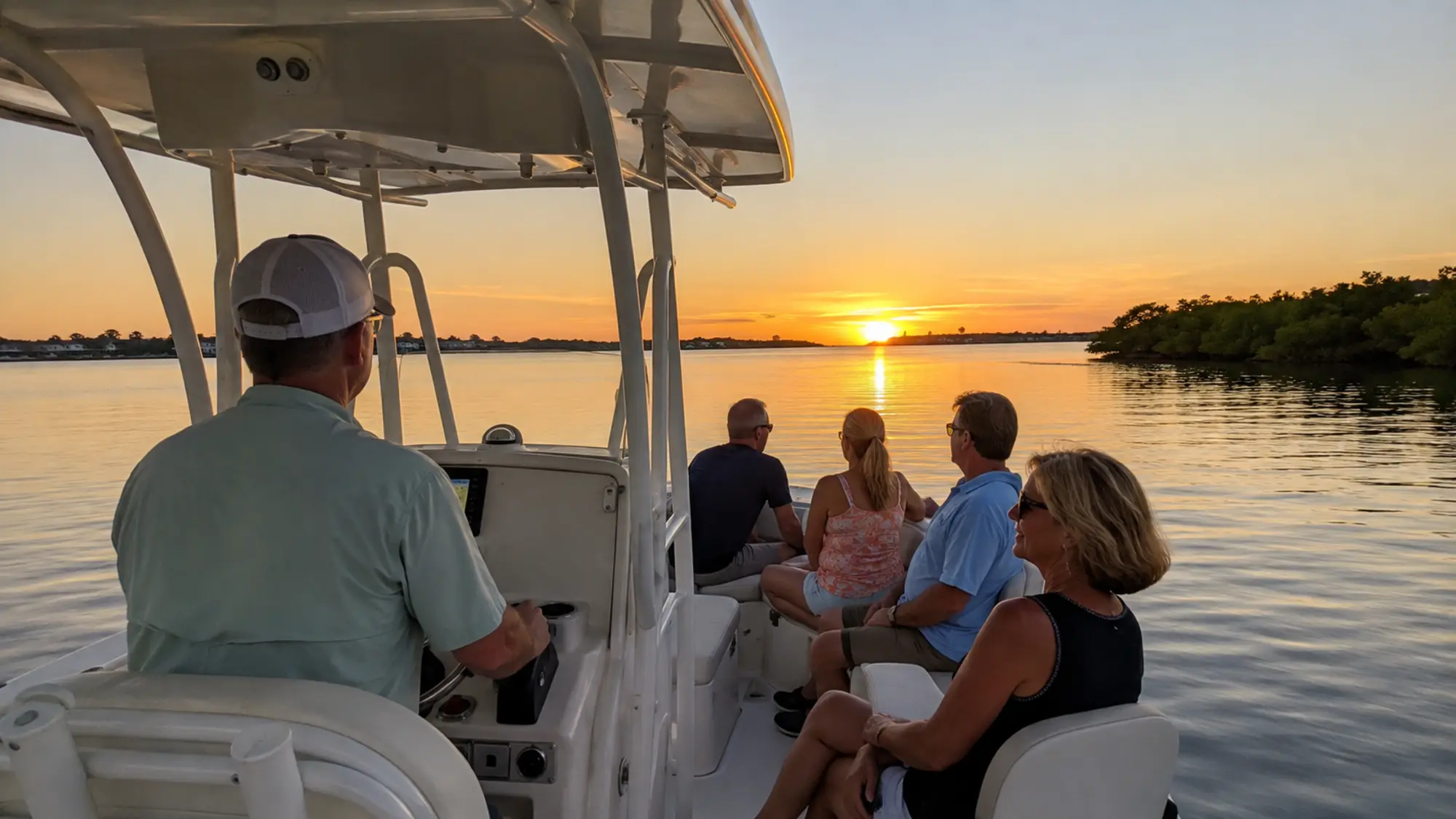
Sunset became the visual and conversion anchor.
The most memorable promise receives the strongest narrative emphasis, while fishing, wildlife, private groups, and sightseeing remain clear alternatives.
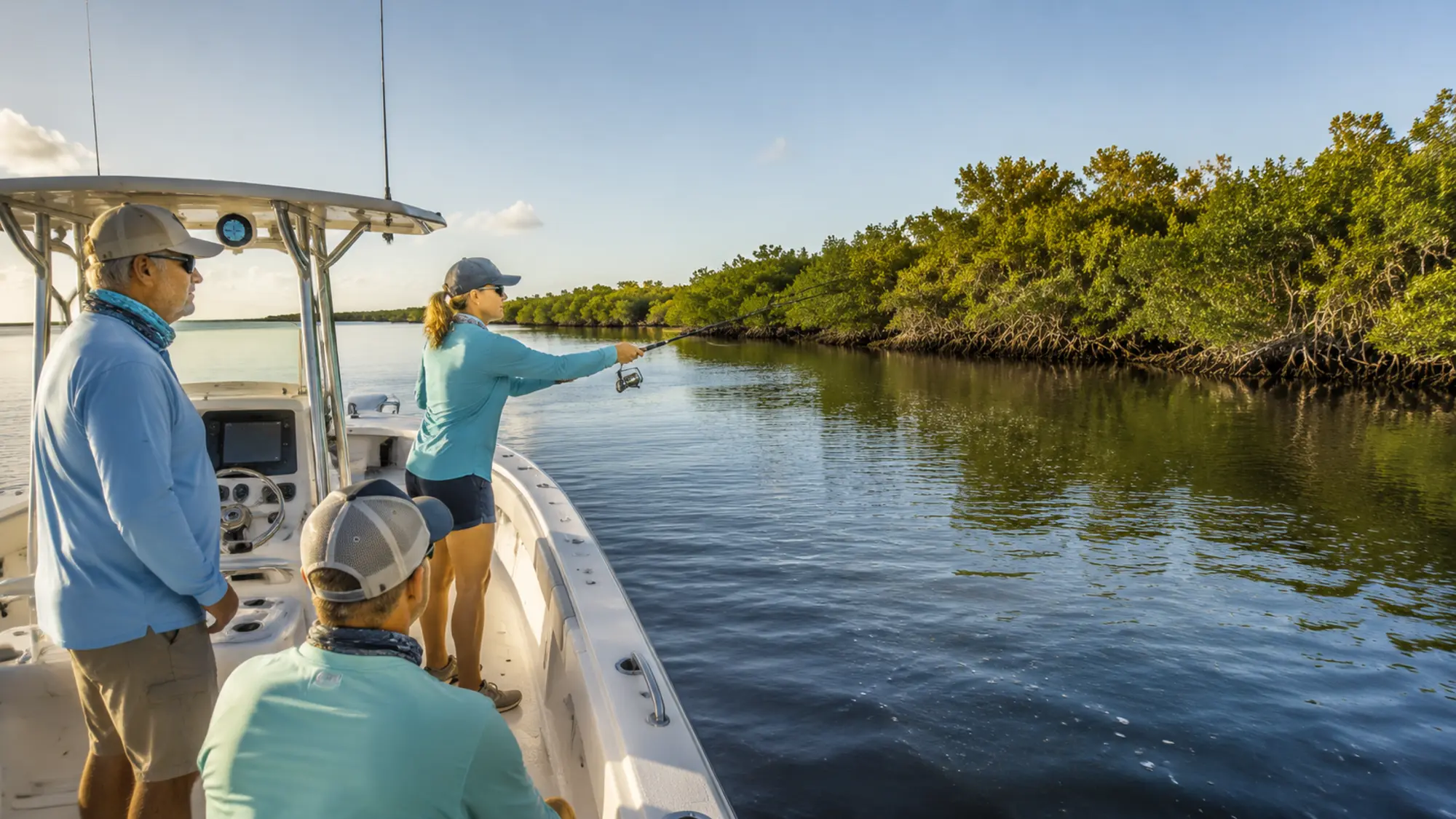
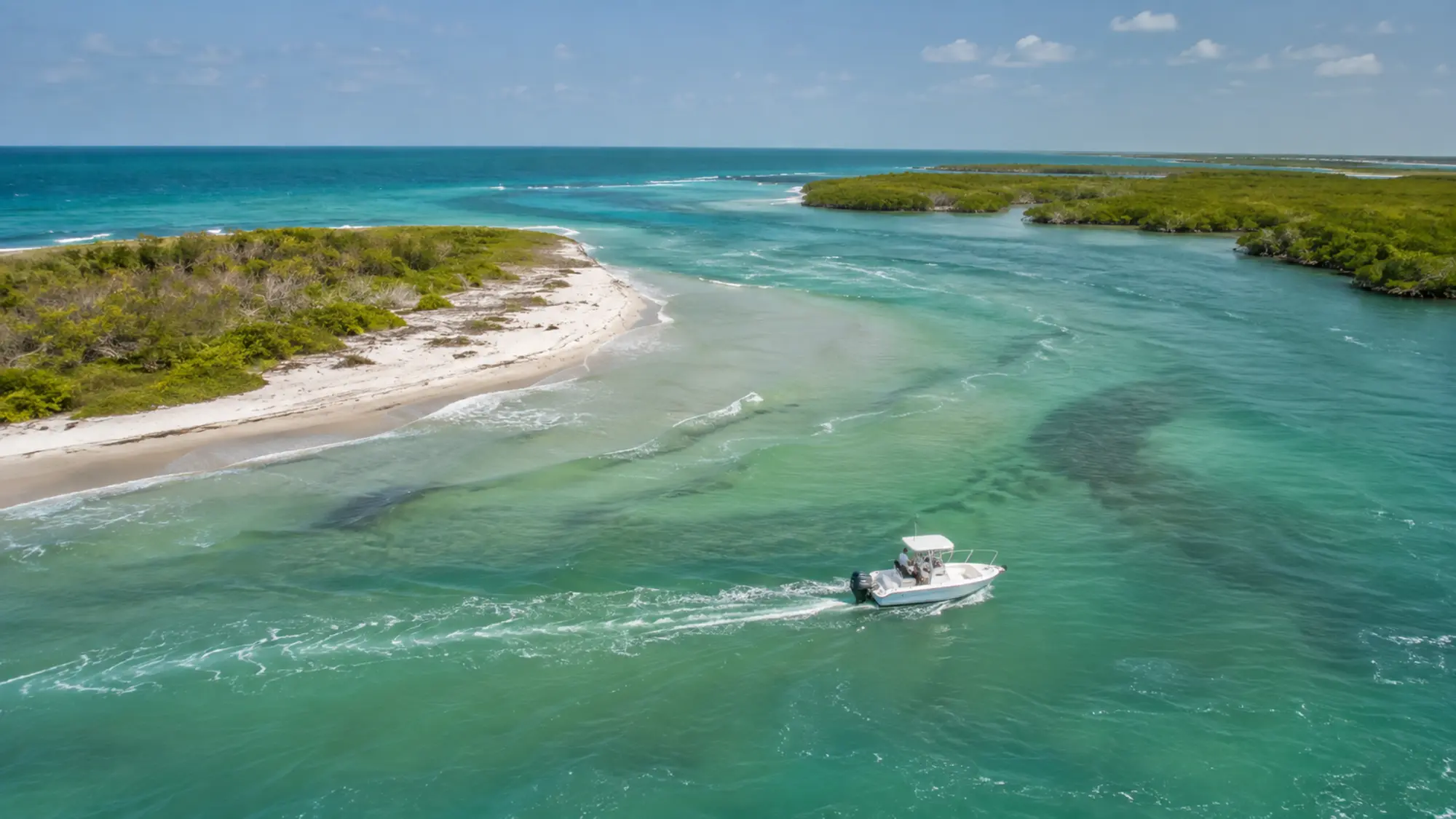
The website's 67 hero scenes were created specifically for the project and are treated as illustrative marketing imagery. They are not presented as documentary photographs of a particular captain, vessel, route, catch, or wildlife encounter.
Help first. Then make the next step obvious.
The site does not force every visitor into the booking form immediately. It gives each person enough information to understand fit, prepare useful details, and approach the inquiry with realistic expectations.
“I want to do something on the water, but I do not know which trip fits.”
Tour and activity pages meet broad curiosity without assuming the visitor already understands Lemon Bay.
Explain the practical questions a first-time guest is already carrying.
Children, motion comfort, weather, accessibility, timing, sun, spray, wildlife, and fishing expectations receive real space.
Present the closest experience and the supporting guide.
Commercial pages describe the outing, while related resources let the visitor go deeper without losing the booking path.
Turn uncertainty into a prepared request.
The form asks for the date range, group size, children's ages, tour interest, and relevant trip-fit questions.
A clearer inquiry for the guest and the operator.
The website does not finalize the reservation. It creates a more informed conversation that can confirm current price, duration, meeting place, and terms.
Submitting the booking form begins an availability conversation. It does not claim the boat is reserved, accept payment-card information, or guess at terms that belong in a written confirmation.
Sixty-seven routes... one maintainable source of truth.
The website is not a folder of separately edited pages. Global navigation, calls to action, contact routing, metadata, schemas, breadcrumbs, forms, and footer content flow through shared configuration and components.
Server-rendered PHP
Apache routes clean URLs through one entry point. PHP returns complete HTML, handles canonical trailing slashes, and serves a real 404 response when a route is missing.
Shared components
One renderer controls the header, desktop and mobile navigation, footer, calls to action, forms, cards, breadcrumbs, related content, and schema utilities.
Generated registries
The editable source publishes JSON for the site identity and every page. It also generates a Markdown alternate for every route and one complete llms.txt index.
Build validation
Automated checks reject missing metadata, broken relationships, external hero images, stale registries, fewer than three FAQs, and indexable pages below 375 words.
Every route carries its own meaning.
- Unique title, meta description, canonical URL, H1, introduction, sections, and page-relevant FAQs
- Breadcrumbs in visible HTML and BreadcrumbList structured data
- LocalBusiness, WebSite, WebPage, and FAQPage schema across the system
- TouristTrip schema added to commercial tour pages
- XML sitemap generated from the same route registry used by the website
- Robots directives that keep source, includes, configuration, and JSON registries out of search results
- Open Graph and X metadata using the relevant local page image
- Markdown alternates and llms.txt for clean machine-readable access
The quiet work carries the experience.
Visitors should not have to notice the technical foundation for it to help them. The system is built so clear content, keyboard access, mobile behavior, fast assets, and careful form handling support the decision in the background.
Truth before persuasion
- No invented captain biography or credential
- No guaranteed dolphin, manatee, sunset, route, or catch
- No guessed public price, duration, dock, address, or phone number
- No fabricated review, award, result, or testimonial
Accessible interaction
- Semantic header, navigation, main, section, form, and footer landmarks
- Skip link, visible labels, focus states, and keyboard-accessible controls
- Responsive menu and layout for small screens
- Descriptive alternative text and meaningful heading order
Lean delivery
- Local WebP imagery instead of externally hosted stock files
- No front-end framework required to render primary content
- One shared stylesheet and one small shared interaction script
- Server-rendered content available before JavaScript runs
Safer inquiry handling
- Booking and contact paths routed to [email protected]
- Honeypot spam control and required consent
- Explicit warning not to submit payment-card information
- Written confirmation controls exact reservation details
Launch outcomes are real. Long-term outcomes are still being earned.
This project went live in August 2026. The defensible result today is a complete, measurable search and conversion foundation... not a premature ranking graph.
No long-term ranking, organic traffic, booking, or revenue increase is claimed yet. The domain is new, and useful trend reporting requires time and enough first-party data.
The site is ready to learn.
GA4 is installed for behavior measurement, and the domain has been verified in Google Search Console. Booking and contact forms create the primary conversion paths. The next reporting layer should connect those signals to qualified inquiries rather than celebrating impressions alone.
New domain + no search footprint
No published content ecosystem, inherited authority, internal links, measurement baseline, or indexable local topic structure.
Connected local authority platform
Commercial tour pages, six supporting topic systems, shared conversion paths, verified analytics and Search Console access, and an honest measurement plan.
What the launch included.
“Website design” covered the complete public experience and the system that keeps it maintainable.
- Homepage and commercial tour experience
- Sunset cruise topic hub and supporting guides
- Lemon Bay fishing topic hub and supporting guides
- Englewood-area destination and geography pages
- Boating, wildlife, weather, tide, family, and first-trip guides
- Things-to-do discovery cluster
- About, FAQ, booking, contact, policy, and 404 pages
- Responsive header, desktop navigation, and mobile menu
- Booking and contact forms with server-side handling
- Shared global footer and TightDesigns.com credit
- Local WebP hero image for every route
- Unique metadata, canonical URLs, breadcrumbs, and FAQs
- Schema graph with tour-specific markup
- XML sitemap, robots.txt, Markdown pages, and llms.txt
- GA4, Search Console readiness, build checks, and deployment documentation
Local SEO works best when the website behaves like a useful guide.
Depth needs architecture.
Sixty-seven pages would be noise without hubs, intent boundaries, breadcrumbs, related routes, and a clear commercial center.
Uncertainty can build trust.
Saying what weather, wildlife, routes, and fishing cannot guarantee makes the experience more credible and reduces the wrong expectations.
Local means relational.
Englewood, Lemon Bay, Manasota Key, Englewood Beach, and Stump Pass matter because the site explains how the places connect.
Systems protect quality.
Shared components and automated validation make it harder for future pages to lose metadata, imagery, content depth, internal links, or consistent calls to action.
Questions about the Englewood Boat Tours website
What did Tight Designs build for Englewood Boat Tours?
Tight Designs created the information architecture, content strategy, user experience, responsive visual system, custom PHP rendering system, booking and contact paths, technical SEO foundation, structured data, local imagery system, Markdown alternatives, and launch validation for EnglewoodBoatTours.com.
How many pages are in the Englewood Boat Tours website?
The launch build contains 67 crawlable content routes. Each route is connected to a shared page registry, relevant FAQs, breadcrumbs, related pages, metadata, and a local WebP hero image.
Was the website designed for local SEO in Englewood, Florida?
Yes. The structure connects commercial tour pages with useful guides about Lemon Bay, Englewood Beach, Manasota Key, Stump Pass, inshore fishing, wildlife, weather, and trip planning. The goal is to demonstrate genuine local relevance without repeating city names or inventing locations.
Does this case study claim ranking or booking increases?
No. The website launched in August 2026 and is in its early measurement phase. This case study reports verified deliverables and launch readiness. Ranking, traffic, inquiries, and revenue should be added only after enough first-party data exists to support those claims.
Why did Tight Designs use a custom PHP architecture?
Server-rendered PHP keeps every route crawlable without relying on client-side rendering. One shared configuration, content registry, and component renderer control the navigation, header, footer, calls to action, breadcrumbs, forms, schema, and page layouts.
Can Tight Designs build a similar local authority website for another business?
Yes. The exact structure should not be copied blindly, because each business has a different customer, service area, evidence, and sales process. Tight Designs can use the same strategy of clear offers, connected topic clusters, honest local proof, technical SEO, and measurable conversion paths.