
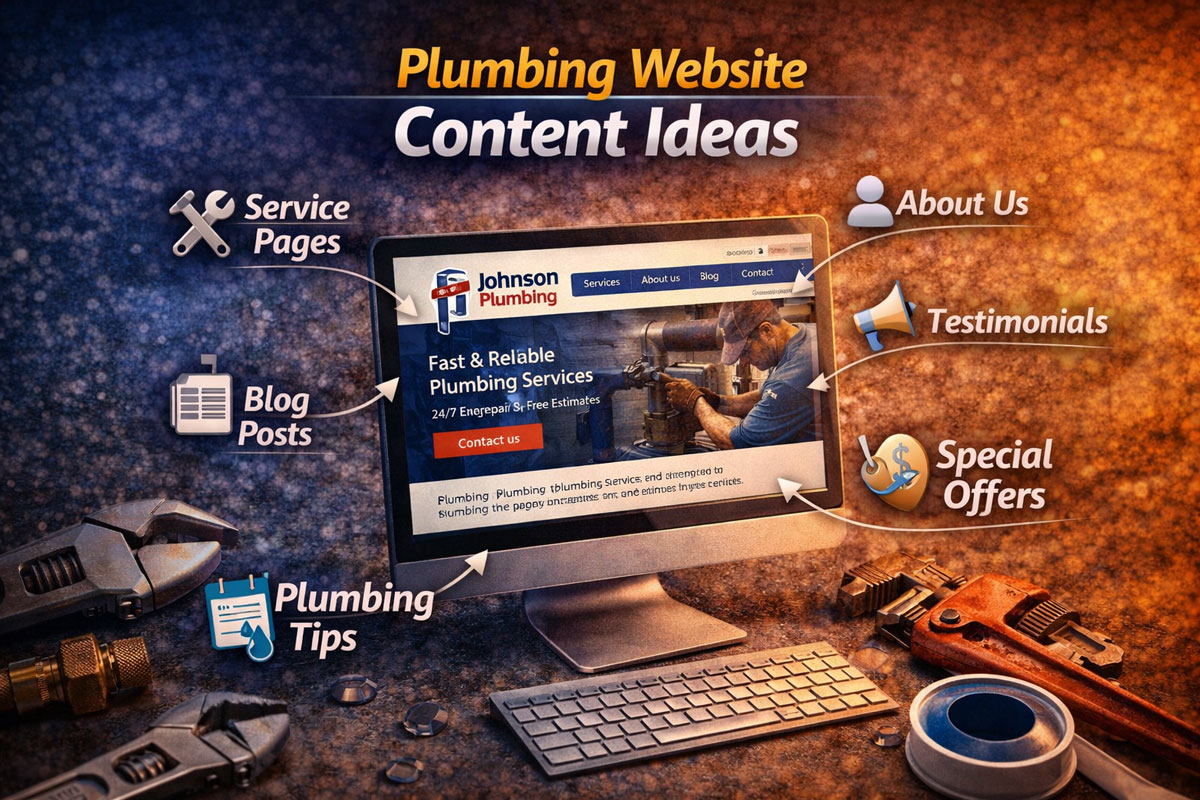
Your plumbing website isn’t just a digital business card…it’s a living library that convinces homeowners you’re the right choice. Beyond basic contact details, it should answer the questions people have before they call… how you solve their problems, how much they can trust you and why you’re different from other plumbers in your town. This guide shows you how to build out meaningful content that attracts qualified leads and positions your company as a local expert.
Core Pages Every Plumbing Website Needs
A plumber’s site should be more than a one‑page brochure. Give each service its own page so search engines and customers understand what you offer. These foundational pages also help you convert visitors into callers because they remove confusion and build trust.
- Individual service pages: Create dedicated pages for water heater installation, drain cleaning, sewer line repair, emergency plumbing and any other core service. Clear descriptions and pricing guidance help homeowners know they’ve found the right pro.
- Service area pages: If you serve multiple towns or neighborhoods, build pages targeting each location. Use local landmarks and neighborhood names so your site shows up when someone searches “plumber near me.”
- About and team page: Tell the story of your company, showcase your technicians’ certifications and include friendly photos. People hire people they trust, so let them see who will show up at their door.
- Contact page: Make it easy to get in touch with a simple form, click‑to‑call buttons and your full Name/Address/Phone number (NAP). For tips on designing an effective contact page, see our plumbing contact page design guide.
- Project gallery and testimonials: Publish before‑and‑after photos of recent jobs and short testimonials from happy customers. This content doubles as social proof and builds credibility.
Educational Blog Content That Attracts Local Homeowners
Blog posts are a powerful way to answer common questions, rank for long‑tail keywords and show off your expertise. Instead of generic articles, focus on topics your customers actually search for in your area.
- How‑to and maintenance guides: Explain how to winterize pipes, flush a water heater or identify when a leak is serious. Make these posts actionable while reminding readers when it’s safer to call a pro.
- Seasonal checklists: Publish spring plumbing checklists or holiday prep guides. These timely posts encourage repeat visits and can tie into direct mail campaigns or flyer promotions.
- Product comparisons and reviews: Compare tankless versus traditional water heaters or different sump pumps. Highlight pros and cons and recommend when each product is appropriate.
- Local stories and case studies: Share real examples of solving tough plumbing problems in your community. Use these posts to showcase before‑and‑after photos and link to your postcard design or business card pages.
Trust‑Building Content That Converts
Visitors might find you through a blog post or ad, but they convert when they feel confident. Trust‑building content answers objections and demonstrates your authority.
- Licensing and insurance details: Clearly state your license numbers, insurance coverage and professional memberships. This reassures homeowners you’re legitimate and properly insured.
- Guarantees and promises: Offer satisfaction guarantees, workmanship warranties or on‑time arrival commitments. Explain what happens if you miss an appointment or a repair fails.
- FAQ section: Answer common questions about service pricing, response times and emergency availability. Providing answers up front reduces phone tag and improves conversion.
- Staff bios and training: Highlight your team’s certifications and ongoing training. This shows customers that every technician meets high standards.
Leveraging Local SEO & Multimedia
Great content isn’t just text. Use multimedia and local SEO practices to capture attention and drive more calls.
- Optimize for local keywords: Include city names and neighborhood descriptions naturally in your content. Add structured data so search engines know you’re a local service provider.
- Video demonstrations: Short videos showing how you unclog a drain or replace a faucet build confidence. Embed them on service pages and share them on social channels.
- Interactive diagrams and infographics: Explain plumbing systems visually. These assets keep people on your site longer and make complicated topics easy to grasp.
- Cross‑promotion: Link your blog posts to downloadable guides, EDDM mailers or flyer design. Integrated marketing yields better results than isolated tactics.
Keeping Content Fresh & Updated
Content marketing is an ongoing process. Set a schedule to review and update your pages so they remain accurate and helpful. Out‑of‑date pricing, expired coupons or broken links will make visitors doubt your professionalism.
- Quarterly review: Check your core service pages every three months. Update pricing, add recent photos and revise copy if your offerings have changed.
- Repurpose evergreen posts: Turn a popular blog post into a video, infographic or printed booklet. Repurposing content saves time while reaching new audiences.
- Monitor search terms: Use analytics tools to see what search phrases bring visitors to your site. Write new content around emerging topics to maintain momentum.
- Link between pages: Add contextual links to related articles like homepage design, service pages design and company website design so readers continue exploring.
Frequently Asked Questions
What types of blog posts generate leads for plumbers?
Answer questions that homeowners actually ask. “How to unclog a bathroom sink” or “When to replace a water heater” perform better than industry jargon. Include clear calls to action and internal links to your services.
How long should plumbing blog posts be?
Focus on providing complete answers rather than hitting a specific word count. A 700‑word article that solves a problem is better than a 2,000‑word piece with filler. Use headings and lists so busy readers can scan quickly.
How often should I update my website content?
Review core pages quarterly and refresh blog posts annually. Update sooner if your services or pricing change. Stale information can harm your credibility and search rankings.
Need Help Creating Content for Your Plumbing Website?
Developing a content strategy takes time. If you’d rather focus on serving customers, partner with experts who understand local service marketing. Our team can plan, write and design high‑performing content that brings you more calls and repeat customers. Learn more about our plumber marketing solutions today.