Business cards may be small, but they carry a big opportunity to connect with customers…and for plumbers the right details build confidence and prompt a call. Each card is a micro‑billboard for your company, so treat it like a tiny sales tool, not an afterthought. Below you’ll discover what information to include, how to present it and clever extras that turn a simple card into a powerful lead generator.
Essential Information to Build Trust
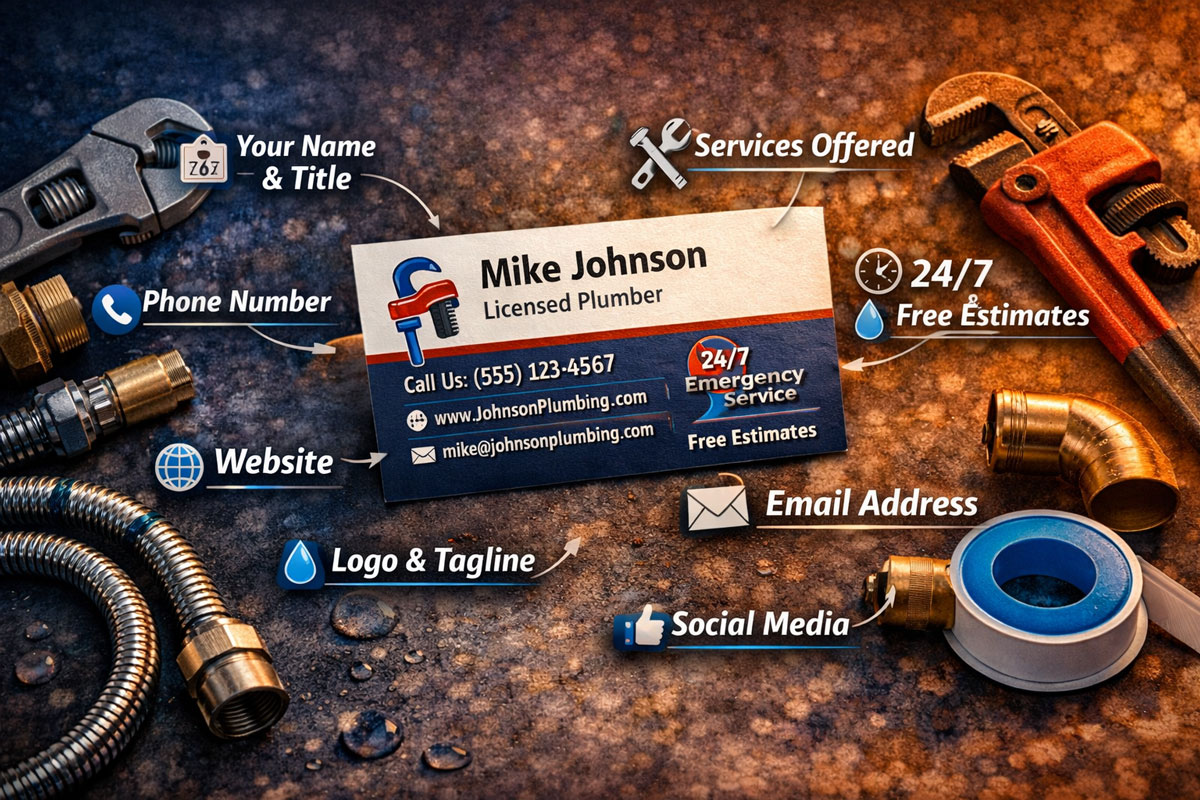
The front of your card should answer the most basic questions a homeowner has: Who are you, what do you do and how can they reach you? Think of it as a 30‑second introduction that fits in a wallet. Be concise but thorough – missing details make prospects search elsewhere.
- Company name & logo: Your logo signals professionalism and consistency. Make sure the artwork is high‑resolution and legible when shrunk down. Align it with your branding across your branding materials so homeowners recognise you at a glance.
- Your name & title: Let recipients know who they’ll be calling. Including your title (owner, master plumber, estimator) reinforces authority and accountability.
- Contact details: Provide a phone number – include an emergency line if you offer 24/7 service – plus email and website. A physical city or service area adds local relevance. Use a larger font size so older homeowners can read it easily.
- License & certifications: Many jurisdictions require license numbers on marketing materials. Displaying your plumber’s license, insurance badges or industry affiliations is a simple way to build trust.
- Service tagline: A short phrase like “Fast, honest & affordable plumbing” or “Fixing leaks since 1999” differentiates you. Keep it to one sentence to avoid clutter.
- Call to action: End with an invitation such as “Call today for a free estimate” or “Book online for priority scheduling.” A direct prompt increases the chance a prospect will act.
Optional Enhancements that Drive Response
Once the basics are covered, consider adding extras that make the card more memorable or functional. These optional elements shouldn’t overwhelm the design; they should support your goals, whether that’s capturing leads or encouraging repeat business.
- QR code: A QR code linking to your appointment booking page or to your website makes it easy for tech‑savvy customers to schedule service.
- Referral line: Add a blank line where current customers can write a friend’s name. Offer a discount to both parties to encourage sharing.
- Appointment reminder: Use the back of the card to note the date and time of the next service visit. This simple tool keeps your card on the customer’s fridge and increases retention.
- Special offer or coupon code: Include a short URL or coupon code that tracks which cards generate responses. Unique codes help measure ROI on different distribution channels.
- Service list on the reverse: Use the back side to list key services like drain cleaning, water heater installation and bathroom remodels. Pair each service with an icon to improve readability.
Regulatory and Trust Elements
Plumbing is a licensed trade. Failing to include required information or misrepresenting credentials can lead to fines and erode trust. Beyond your license number, there are other trust factors worth showcasing.
- Insurance coverage: If you carry liability or workers’ compensation insurance, note it. Homeowners want assurance they’re covered in case of an accident.
- Certifications & memberships: Associations like the Plumbing‑Heating‑Cooling Contractors Association (PHCC) or Better Business Bureau membership signal reliability. Use their logos sparingly and ensure you have permission.
- Safety or eco badges: If your team is OSHA certified, background‑checked or trained in eco‑friendly practices, say so. Small icons can communicate a lot without taking up much space.
- Legible type & contrast: Use high‑contrast color combinations and avoid fancy fonts so that all ages can read the information without squinting.
- Proofread meticulously: One typo can undermine your professionalism. Verify your phone number, website URL and license number before sending the design to print.
Making the Most of the Back
Don’t let the back of your card go to waste. When thoughtfully designed, it can double the amount of information you share without crowding the front.
- Service menu: Summarize your primary offerings and pair each item with a small icon. Keep the list to three to five items so it doesn’t feel like a brochure.
- Testimonials or guarantee: A short quote from a happy client or a “100% satisfaction guarantee” line adds social proof.
- Link to educational content: Direct readers to a helpful blog post, like our guide on designing service pages for your website. This positions you as an expert and drives traffic.
- Personal note space: Leave a blank area where you can jot down a custom tip or follow‑up reminder. Personalization increases the likelihood the card will be kept.
Integrating Business Cards into Your Marketing
Business cards work best when they’re part of a broader strategy. Use them to reinforce your brand and connect prospects to other marketing channels.
- Pair with other print pieces: Hand out a card along with a postcard, flyer or door hanger. Bundling materials reinforces your message.
- Use tracking codes: Assign different discount codes or URLs to cards used at events, left on job sites or mailed to prospects so you can see which distribution method drives the most calls.
- Equip your team: Make sure every technician, estimator and office staff member has a stack of cards. Encourage them to leave one behind after each job and at networking events.
- Update regularly: Whenever you add services or change contact information, redesign your cards. Out‑of‑date cards can frustrate potential customers.
- Link to your portfolio: Include a QR code that points to your business card examples or project gallery. Prospects can see the quality of your work before calling.
Frequently Asked Questions
Do I really need to include my license number?
In many states, including license numbers on marketing materials is required by law. Even when it’s optional, listing your credentials builds trust and sets you apart from unlicensed competitors.
What if I offer multiple trades like HVAC and electrical?
Use icons or bullet points to list additional services. A card can mention HVAC, electrical or water treatment alongside plumbing without looking cluttered if you keep the design simple.
How can I make my card stand out without looking gimmicky?
Focus on quality printing, clear design and one or two memorable elements like a QR code or rounded corners. Avoid novelty shapes that won’t fit in wallets; a refined card communicates professionalism.
Need Help Designing the Perfect Card?
If you want cards that feel bespoke and on‑brand, our team specializes in business card design for plumbers. We’ll craft a layout that includes all the important information, ties into your branding and integrates seamlessly with other materials like direct mail. Reach out to start designing your card today.