A bad business card usually does not fail because of one huge mistake. It fails because of several small decisions that work against each other… weak hierarchy, too much information, poor readability, cheap print choices, a missing call to action, or a design that looks fine on a screen but falls apart in real life. The frustrating part is that many of these mistakes are avoidable. If you know what to watch for, your card can do a much better job of representing your business and helping people take the next step.
Trying to fit too much onto a small piece of paper
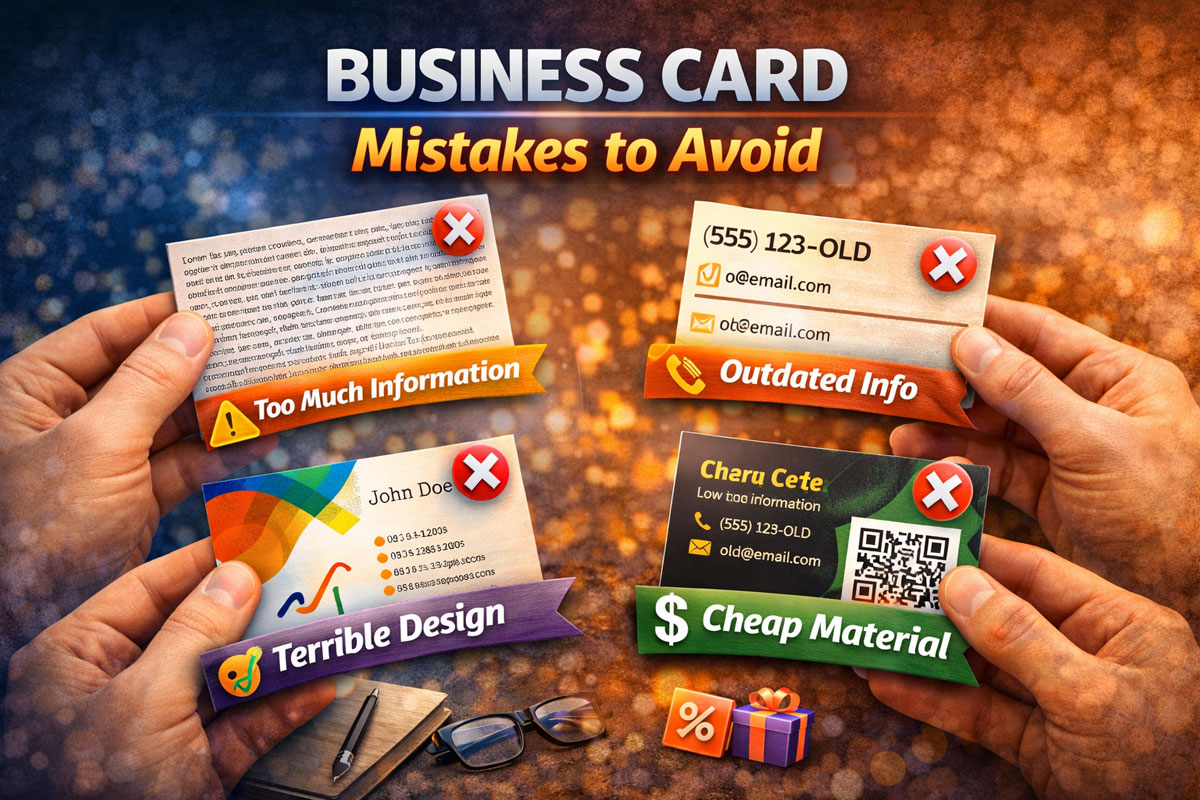
This is probably the most common business card mistake. People get nervous about leaving something out, so they try to include everything… every service, every phone number, every social platform, every credential, every idea they have about the business. The result is usually clutter.
A business card is not supposed to do the job of a brochure, flyer, and website all at once. Its job is to create recognition, deliver the right contact path, and make the next step easier. When the card gets overcrowded, nothing stands out clearly and the whole piece feels weaker.
- Too many services: A short priority list is usually better than a long wall of text
- Too many contact methods: Give people the best path, not every possible path
- Too much explanation: Use short positioning cues instead of paragraphs
If you are unsure what actually belongs on the card, read what to put on a business card.
Using text that is too small to read comfortably
A card can technically contain the right information and still fail if people have to squint to use it. Tiny text is one of the fastest ways to make a card feel cheap, rushed, or poorly planned. It usually happens when too much content is being forced into too little space.
Readable cards feel easier to trust because they feel more intentional. Important details like the name, phone number, website, and next step should be easy to find and easy to read at a glance. If the text is getting small just to make everything fit, that is usually a sign that something needs to be removed or restructured.
Weak hierarchy that makes the card feel confusing
Hierarchy is what tells the eye where to look first, second, and third. When hierarchy is weak, the card feels disorganized even if the design is technically clean. People should be able to quickly identify the brand, the person or business, and the best way to contact you without hunting around for it.
A common mistake is making everything the same visual weight. If the logo, name, title, phone number, website, and service description are all competing equally, the card does not guide attention well. Strong cards feel easier to process because the layout does some of the work for the viewer.
If you need help getting that structure right, our business card design services can help build the card around clarity instead of guesswork.
Choosing design over usability
There is nothing wrong with wanting a card to look impressive. The problem starts when style begins to interfere with function. Overly decorative fonts, low contrast color combinations, awkward layouts, and trendy effects can all make a card harder to use.
This happens a lot when people design for the mockup instead of the real-world experience. On screen, the card may look sharp and dramatic. In print, it may become harder to read, harder to scan, or less practical than expected. A strong business card should look good, but it should also work without effort.
Picking the wrong size or shape just to stand out
Different sizes and shapes can work, but they are not automatically better. Some business owners assume a square, slim, or oversized card will make them more memorable. Sometimes it does. Other times it just makes the card harder to store, harder to lay out well, or more likely to get tossed aside.
If the size helps the brand and still keeps the card practical, fine. If it mainly creates inconvenience, it may not be worth it. A standard size often performs better than people expect because it fits naturally into real life.
If you are deciding between standard and alternative formats, read best business card size and dimensions.
Using cheap printing that weakens the impression
Printing has a bigger effect on perceived quality than many people realize. A card with muddy color, weak stock, poor trimming, or a finish that fights readability can make the business feel less polished before a conversation even starts. Cheap is not always bad, but wrong-for-the-job often is.
For example, a premium service may lose some credibility if the card feels flimsy. On the other hand, some businesses do not need the most expensive option… they just need something clean, readable, and durable enough to hold up in daily use. The smart move is choosing the print style that matches the role of the card, not blindly chasing the lowest price.
For print-related decisions, see our business card printing services page and our comparison of cheap vs premium business cards.
Forgetting the back of the card exists
Another common mistake is leaving useful space on the table. The back of the card can be used strategically for a QR code, short offer, service list, review prompt, appointment note, or next-step message. Too many businesses either leave it blank without a reason or stuff it with too much information that turns it into clutter.
The back should support the front, not compete with it. Used well, it can improve response and make the card more useful without making the design feel crowded.
Adding a QR code without thinking through print reality
QR codes can be excellent when they reduce friction, but they can also create problems when they are added carelessly. A code that is too small, too detailed, too low contrast, or tied to an unstable paid routing service can fail in the real world even if it looks fine on screen.
One mistake people make is assuming that because the QR code scans on a desktop preview, it will scan perfectly on the finished card. That is not always true. Print size, resolution, contrast, and destination complexity all matter.
If you are considering a QR code, our Business Cards with QR Codes page covers what to watch for.
Leaving out a clear next step
A lot of business cards provide contact information but do nothing to guide action. That is a missed opportunity. Even a subtle call to action can make the card more useful. It might be as simple as calling for a quote, scanning to book, visiting a gallery, or saving contact info.
Without a next step, the card may still function as a reference piece, but it is not doing as much work as it could. The best calls to action are simple, relevant, and matched to how the business actually wins customers.
For ideas, see how to write a business card call to action.
Ordering the wrong quantity
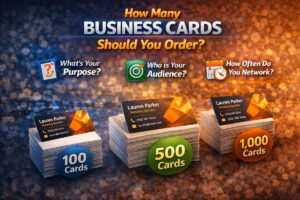
Quantity mistakes can hurt in two directions. Order too few, and you may run out at the wrong time and end up paying more later for a rush reorder. Order too many, and you risk sitting on outdated cards if your branding, contact information, team details, or offer changes.
The better move is to order based on actual usage and stability. Think about how fast the cards move, how many people need them, and whether anything important may change in the near future.
If you are trying to decide the right amount, read how many business cards should you order?.
Waiting too long and forcing a rush job
Some business card problems are not design problems at all… they are planning problems. Waiting until the last minute often leads to rush fees, fewer options, more stress, and lower-quality decisions. When a deadline gets tight, people approve things too quickly, skip proper review, or pay more than they needed to.
Rush printing has its place, but it should be the exception. If you know events, meetings, outreach, or staffing changes are coming, it is much better to prepare early than to scramble later.
If time is already tight, our same-day business card printing page explains the realities of rush turnaround.
Ignoring whether the card actually fits the business
One of the biggest strategic mistakes is copying a style that looks nice for someone else but does not fit your business, audience, or sales process. A luxury card style may not make sense for a price-driven service. A playful layout may not fit a conservative professional setting. A minimalist card may look elegant but leave out too much context for a referral-heavy business.
The best card is not the one that looks coolest in isolation. It is the one that supports the business model, audience expectations, and kind of trust you need to build.
Frequently Asked Questions
What is the biggest mistake people make with business cards?
Usually it is trying to fit too much onto the card. That leads to clutter, weak hierarchy, and smaller text that hurts readability.
Should a business card be simple or detailed?
Usually simpler is better, but simple does not mean empty. The card still needs enough information to be useful and move the next step forward.
Do cheap business cards hurt your brand?
They can if the print quality feels weak, sloppy, or mismatched to the kind of impression your business needs to make.
Is it a mistake to leave the back blank?
Not always, but it is often a missed opportunity. The back can support offers, QR codes, or calls to action when used strategically.
How do I avoid making these mistakes?
Start with the purpose of the card, keep the content focused, prioritize readability, and make sure the design and print choices fit how the card will actually be used.
Need Help?
If you want business cards that feel clear, professional, and built for real-world use, Tight Designs can help. Take a look at our business card services or contact us to get started.