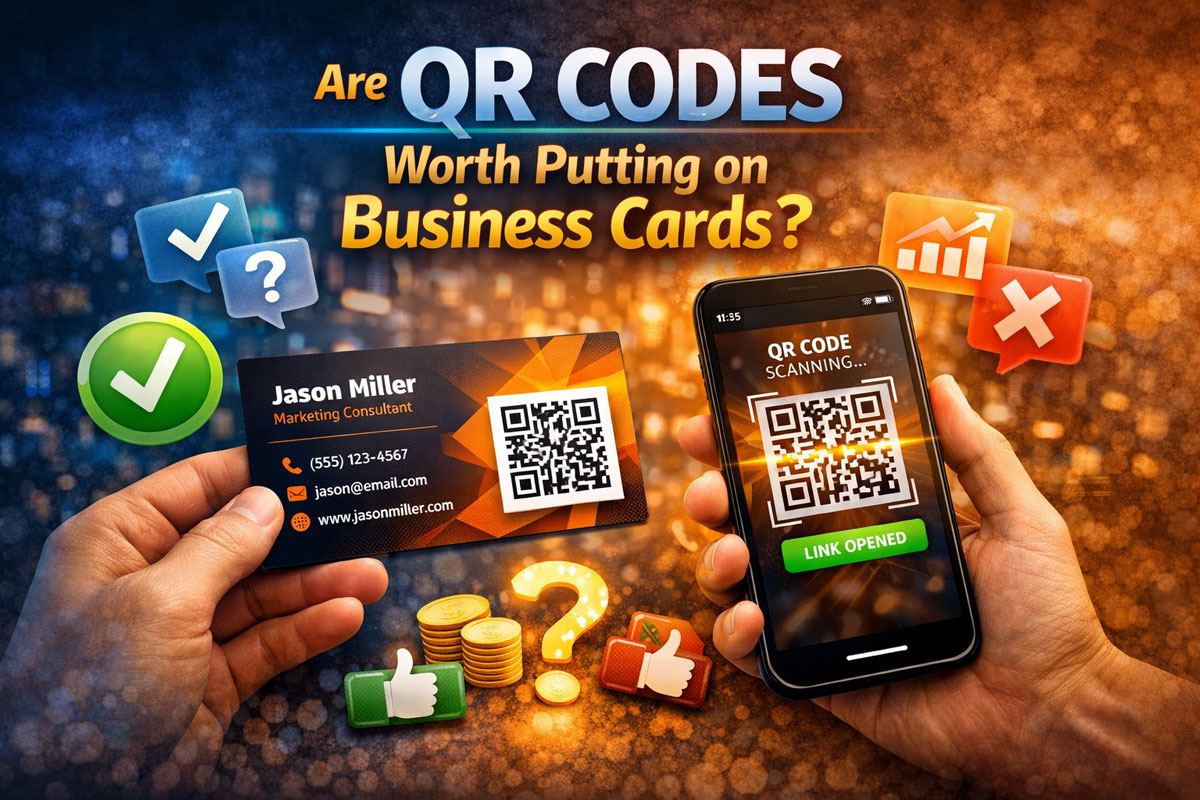
Yes… QR codes can absolutely be worth putting on business cards. But they are only worth it when they make the card easier to use, not when they are added just because they feel modern. A QR code should reduce friction, guide the next step, and connect the printed card to something useful online. If it does that well, it can make the card more effective. If it is too small, poorly printed, low contrast, or points to the wrong destination, it can just become clutter.
Why QR codes can be valuable on business cards
The strongest argument for using a QR code is convenience. Instead of expecting someone to type a website address, search for your business later, or remember which service page to visit, the card can give them a direct shortcut. That matters because the easier the next step is, the more likely it is to happen.
This is especially useful when the URL is long, unattractive, or packed with tracking parameters. A business card has limited space, and printing a giant messy link is not always a great look. A QR code can keep the design cleaner while still getting people where you want them to go.
- Good for booking pages
- Good for quote request forms
- Good for portfolios and galleries
- Good for menus, offers, and campaign pages
- Good for digital contact saving
When a QR code is actually worth it
A QR code is worth putting on a business card when it removes friction from an action people are likely to take. If the next step is better done on a phone than by memory, a QR code usually has real value. If the destination helps the card do more than it could do on its own, that is another good sign.
For example, a service business might use a QR code to send people to a quote form. A med spa might send people to online booking. A designer might send people to a portfolio. A restaurant might link to a menu. In each case, the code earns its place because it improves usability.
If the QR code does not lead anywhere meaningful, though, it may not be worth adding. Modern does not automatically mean useful.
When a QR code may not be worth it
There are also cases where a QR code is unnecessary. If your business card already works well with a short, clean website address and the main goal is just to give people simple contact information, adding a code may not improve much. The same is true if your audience is unlikely to scan, or if the card is already visually crowded.
A QR code can also be a bad idea when it is being used as a shortcut for weak thinking. If the card has no clear strategy, no useful destination, or no obvious reason for someone to scan, the code is not solving anything. It is just taking up space.
The biggest benefit… reducing friction
At the end of the day, this is what matters most. QR codes are worth it when they reduce friction. Typing is friction. Searching is friction. Trying to remember a specific page later is friction. A quick scan removes those little obstacles.
That is part of why QR codes often perform well when they are integrated tastefully into a card. People do not need to think much. They scan, they land where they need to go, and the interaction continues. For some audiences, that convenience is especially appealing.
But print changes everything
One of the most common mistakes people make is assuming that because the QR code looks nice on screen, it will work perfectly in print. That is not always true. Screen preview can be misleading. On a monitor, the code often appears larger, sharper, and easier to read than it will on the finished business card.
Once the card is printed, the actual size matters a lot more. If the QR code has too many tiny boxes and gets shrunk to fit the design, scan reliability can drop. A code that feels perfectly fine on screen can become annoying in real life.
That is why QR codes need to be judged based on real print conditions, not just digital mockups.
Long URLs can create scanning problems
This is something many people overlook. The longer the destination string, the more complex the QR code becomes. More complexity means more little boxes packed into the code. If the card layout forces that code to be small, the scanner has less room for error.
That does not mean long destinations are impossible. It just means they need to be handled carefully. In many cases, a cleaner redirect or shorter destination makes the QR code more print-friendly and more reliable.
If you are using tracking parameters, campaign tags, or ugly URLs, that may be a strong reason to use a QR code… but it is also a reason to think carefully about how the final code is generated.
Color contrast matters more than style
Another reason QR codes sometimes fail is poor contrast. Mobile scanners need a clear distinction between the code and the background. A dark code on a light background is usually the safest choice. Once you start getting too fancy with low contrast palettes, gradients, or busy textures, the code may become harder to read.
That is why function has to come before decoration. A QR code that blends beautifully into the design but fails to scan is not helping the business. A simpler code that scans quickly is almost always the better choice.
Be careful with paid QR platforms
Some businesses use paid QR or tracking platforms to manage scans, route users, and collect analytics. That can be useful, but it comes with risk. If the service requires ongoing payment and you stop paying, the QR code may stop routing correctly or stop working entirely. That is a serious issue when the code is printed on something physical that may stay in circulation for months.
That means the question is not only whether the code works today. It is also whether the destination will keep working later. Stability matters. If the QR code is going on a business card, the business should think beyond the initial design moment and consider long-term reliability.
What makes a QR code worth it on a business card
A QR code is usually worth it when all of the following are true…
- It leads somewhere genuinely useful
- It reduces friction compared to typing or searching
- It is large enough to scan comfortably in print
- It has strong contrast
- It does not overcrowd the layout
- It points to a stable destination
If those boxes are checked, the QR code can add real value. If they are not, the code may be more trouble than it is worth.
What businesses tend to benefit the most
Businesses that rely on booking, lead forms, portfolios, menus, or digital follow-up often get the most value from QR codes. That includes service businesses, med spas, creative professionals, restaurants, event businesses, and brands that want to connect a physical handoff to an online action.
They can also work especially well when the card is part of a broader sales flow. For example, if someone receives the card after an appointment, estimate, or conversation, the QR code gives them a quick path to keep moving.
What businesses should avoid forcing it
Not every card needs a QR code. If the business already has a strong short URL, the layout is better without the code, and the audience does not really need a scan-based shortcut, then skipping it may be the smarter move. A card should not feel like it is trying too hard to be current. It should feel intentional.
The better question is not “Should every business card have a QR code?” The better question is “Does this card become more useful with one?”
Frequently Asked Questions
Are QR codes a good idea on business cards?
Yes… when they reduce friction and send people somewhere useful like a booking page, quote form, portfolio, or contact page.
Can a QR code hurt a business card?
Yes. If it is too small, too low contrast, too complex, or tied to a weak destination, it can hurt usability and clutter the design.
Do QR codes work better than printing a website URL?
Sometimes. They are especially helpful when the URL is long, ugly, or difficult to type. If the URL is short and simple, the value of a QR code may be lower.
Why do some QR codes fail after printing?
Usually because they were judged on screen instead of in print, made too small, given poor contrast, or built from a destination string that created too much complexity.
Should I use a paid QR code platform?
Only if you understand the tradeoff. If the service depends on ongoing payments and you stop paying, the printed QR code may no longer work as intended.
Ready to Get Started?
If you want a business card QR code that actually earns its place, Tight Designs can help you build it the right way… with the right destination, the right contrast, and the right print setup. You can explore our business card page or contact us to get started.