Business card pricing seems simple at first.
You pick a quantity, pay the price, and move on.
But that is only part of the story.
The real question is not just how much business cards cost to print. The real question is how much a business card costs when it fails to do its job.
A cheap card that gets ignored is not cheap. It is expensive. It costs you missed conversations, lost trust, weak first impressions, and opportunities that never turned into revenue.
A well-designed card works differently. It gives people a reason to remember you, contact you, and take you seriously. In some industries, one card handed to the right person can lead to repeat work, referrals, and a customer relationship that pays you for years.
So yes, business cards have a print cost. But they also have a performance cost.
That is the difference between a stack of paper and a tool that helps win business.
Quick Answer… Business Card Pricing
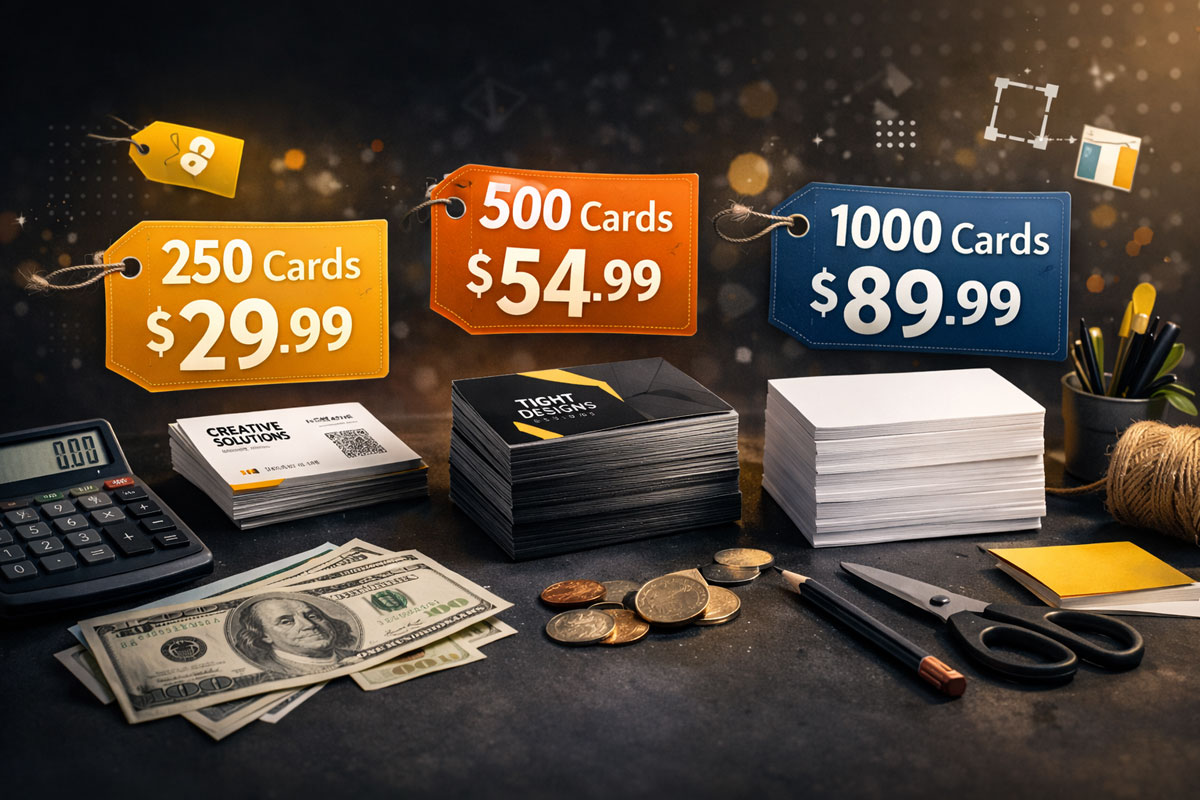
As of writing this post, our standard Glossy and Matte business card pricing is:
- 100 cards… $35
- 250 cards… $40
- 500 cards… $45
- 1,000 cards… $60
These prices apply to standard business cards in common quantities. If you want special finishes, upgraded materials, custom shapes, or rush turnaround, the cost can increase.
Business Card Price Breakdown by Quantity
100 Business Cards… $35
A 100-card order is often best for:
- testing a new design
- trying a new message
- starting a new business
- small personal use
- limited networking needs
This quantity keeps your upfront cost low, but the cost per card is higher.
It is practical when you are still figuring things out. It is less practical when you are actively handing out cards every week.
Wisdom nugget: Small quantities reduce risk, but they can also keep you in testing mode too long. If your business is real and active, sometimes the bigger risk is undercommitting.
250 Business Cards… $40
For many people, 250 cards is the sweet spot.
Why?
Because the jump in total cost from 100 to 250 is small, but the value goes up a lot. You get more room to network, leave cards behind, keep some in your vehicle, and still have enough for daily business use.
250 is a solid choice for:
- realtors
- barbers
- contractors
- cleaning companies
- small business owners
- side hustlers becoming more established
If you are serious enough to hand out cards consistently, 250 usually makes more sense than 100.
500 Business Cards… $45
At 500 cards for $45, this is where many customers begin to see obvious value.
The cost difference between 250 and 500 is minimal, but the quantity doubles. That makes 500 one of the strongest value points in standard business card printing.
500 cards is a smart option for businesses that:
- attend events
- do door-to-door outreach
- leave cards at counters or partner locations
- meet customers in person regularly
- want to stay stocked without reordering too soon
For a lot of service businesses, this is the most practical quantity.
Wisdom nugget: When the price difference is small, the cheapest option is not always the smartest option. Buying too few cards can force you to reorder sooner, spend more over time, and operate from scarcity.
1,000 Business Cards… $60
At 1,000 cards for $60, the value per card becomes even stronger.
This quantity works well for established businesses, teams, and anyone who goes through cards consistently.
1,000 cards is often ideal for:
- busy service businesses
- sales professionals
- restaurants and hospitality businesses
- medical offices
- trade businesses
- companies with multiple team members
If you already know your brand, message, and contact information are dialed in, 1,000 can be a smart investment.
But there is an important warning here…
If the design is weak, the offer is unclear, or the messaging is off, printing more of a bad card only multiplies the mistake.
That is why it is important to get the card right before scaling the quantity.
What Is the True Cost of a Business Card?
This is where most pricing articles stop too early.
They tell you what you pay the printer.
They do not tell you what you pay when the card underperforms.
A business card is not just ink on stock. It is a first impression in physical form. It is a miniature sales tool. It is often one of the few pieces of marketing that gets handed directly from one human being to another.
That means the true cost of a business card includes more than printing.
It includes:
- the clarity of your message
- the strength of your design
- the quality of the paper and finish
- the credibility it communicates
- the action it inspires
- the business it helps you win
- the business it fails to win
A badly planned card can create hidden losses:
- people forget you
- your card blends in
- your service feels generic
- your business looks less established
- your best selling point never gets communicated
- the card gets thrown away instead of saved
That is why some cheap cards are actually expensive.
And that is why some premium cards are actually a bargain.
If one strong card lands in the hands of the right customer and starts a profitable relationship, that single card could be worth far more than the total print run.
What Actually Changes the Cost of Business Cards?
Standard business cards are the baseline. Once you move beyond baseline, pricing changes.
1. Special Finishes
Finishes add visual and tactile impact. They help your card stand out, but they also raise the price.
Examples include:
These are good options when presentation matters and you want a more premium feel.
2. Special Stocks
Paper choice changes both perception and cost.
Examples include:
The stock you choose can make your card feel more elegant, durable, textured, or memorable. The right material should match your brand, not just look fancy for the sake of it.
3. Special Cuts
Non-standard shapes often cost more because they require additional production steps.
Examples include:
- Rounded corners
- Circle cards
- Custom die-cut cards
These can be effective in the right context, but they need to support the brand, not distract from it.
4. Rush Turnaround
Speed changes price.
Common turnaround upgrades include:
Rush printing is valuable when you have an event, meeting, or urgent need. But when possible, it is better to plan ahead. Rushed decisions often lead to weaker design choices.
Wisdom nugget: Fast printing is useful. Fast decision-making is dangerous. A rushed card may arrive on time and still fail where it matters most.
Should You Choose the Cheapest Business Cards?
Not automatically.
The cheapest business cards are only a good deal if they still do the job you need them to do.
Here is the real framework:
Choose lower-cost standard cards when:
- you need solid everyday cards
- you want clean, professional presentation
- your audience cares more about clarity than luxury
- you need quantity at a smart price
Consider upgraded cards when:
- you sell high-ticket services
- appearance heavily affects trust
- you want stronger tactile impact
- you are in a competitive, image-driven market
- you need to stand out in a premium way
The mistake is not choosing standard cards. Standard cards are often exactly the right choice.
The mistake is assuming all cards perform the same just because they all fit in a wallet.
They do not.
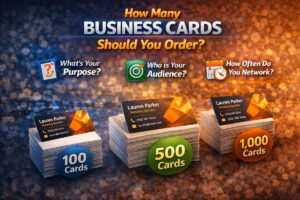
What Quantity Should You Order?
Here is a practical way to think about it.
Order 100 if:
- you are just getting started
- you are testing a new brand or message
- your info may change soon
Order 250 if:
- you want a balanced starting point
- you network occasionally
- you want good value without overcommitting
Order 500 if:
- you hand out cards regularly
- you want the strongest value point
- you need enough cards to keep working without constant reorders
Order 1,000 if:
- your brand and messaging are already proven
- you go through cards steadily
- you want a lower per-card cost and better long-term value
Do Custom Quantities Cost More?
Yes, they usually can.
We do offer custom quantities, but customization often brings additional time and cost. Because of that, most customers choose standard quantities instead.
Standard quantities are usually the most efficient option because they align better with common production workflows. That keeps the process simpler and pricing more favorable.
If you need a custom quantity for a specific campaign, team size, or event, it can still make sense. But in many cases, choosing a standard quantity gives you the better balance of speed, price, and convenience.
How to Decide What Kind of Business Card You Actually Need
Before you pick a quantity, ask yourself these questions:
- Who will receive this card?
- What do I want them to remember?
- What action do I want them to take next?
- Does this card make me look like the kind of business I say I am?
- Is the message strong enough to create trust fast?
- Is my design helping me win business, or just filling space?
These questions matter because printing is the final step, not the first one.
The first step is clarity.
A card with the right message, right layout, and right impression can outperform a fancier card with weak strategy behind it.
A Better Way to Think About Business Card Pricing
Do not just ask:
How much do business cards cost?
Also ask:
- What do I need this card to accomplish?
- What kind of customer am I trying to attract?
- How often will I use them?
- Is this card helping me look forgettable or credible?
- Am I buying cards… or am I investing in a tool that helps me get business?
That shift changes everything.
Because the lowest-priced card is not always the lowest-cost decision.
Final Thoughts
If you want the simplest answer, here it is:
- 100 cards… $35
- 250 cards… $40
- 500 cards… $45
- 1,000 cards… $60
But the smarter answer is this…
The cost of business cards is not just about quantity. It is about effectiveness.
A card that communicates clearly, looks professional, and supports your brand can create opportunities far beyond its print price.
A card that says little, feels forgettable, or fails to move people to act may cost less at checkout… but more in lost time, lost trust, and lost revenue.
That is why the goal should not be to buy the cheapest business cards possible.
The goal should be to choose the right card for the job.
Need Help Choosing the Right Business Cards?
If you are not sure whether you need standard cards, premium finishes, rush turnaround, or help with the actual design and messaging, we can help you figure that out before you spend money on the wrong thing.
A business card should not just exist.
It should work.